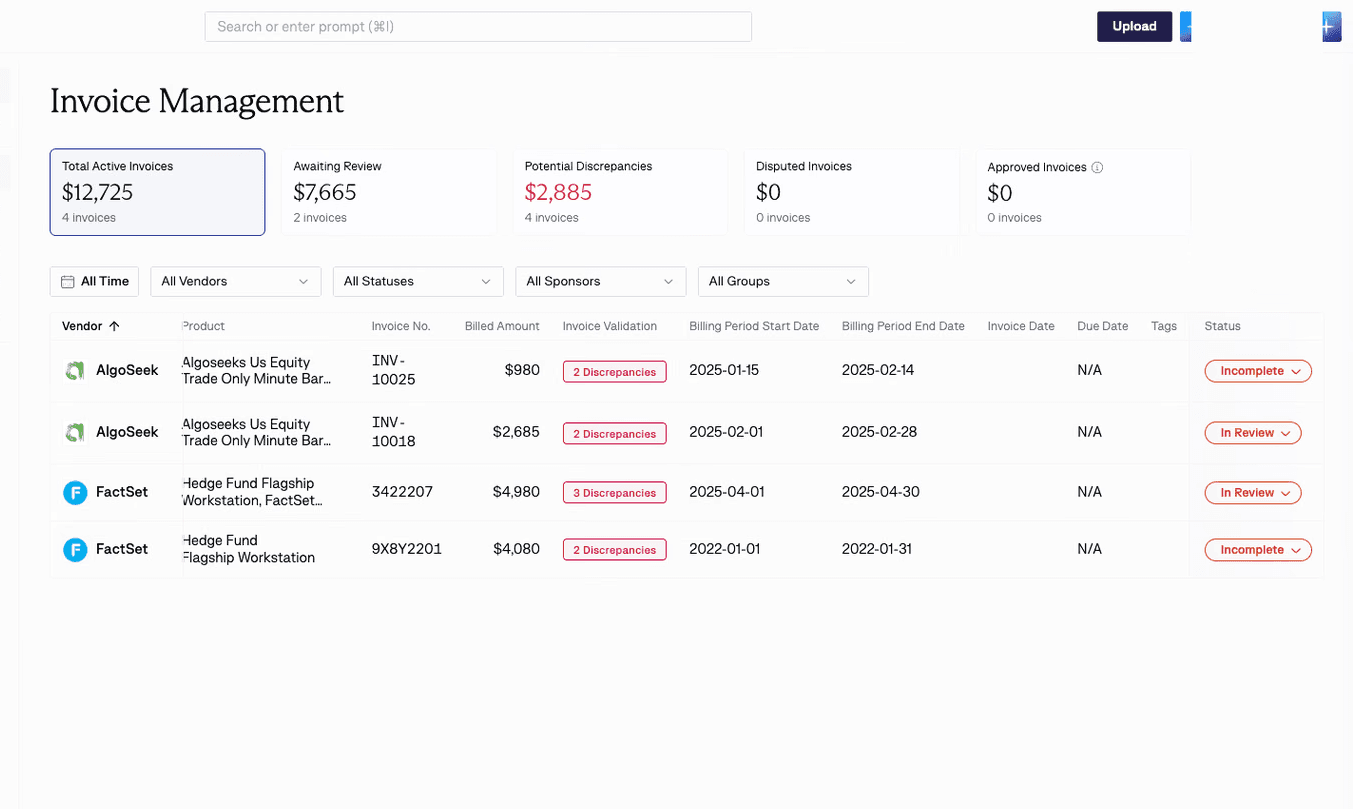
Amended pricing
A revised price can take effect after the original schedule was set up for billing. Compare the applicable fee schedule, amendment scope and invoice period. Do not assume signature order is effective-date order. Assign a reviewer to establish whether the invoice reflects the governing price or needs clarification.
Removed products or services
A service removed from an order may remain in billing records. Locate the removal provision and its effective date, then compare the affected invoice lines. Check the agreement’s adjustment process before assuming a credit. Give the discrepancy an owner and retain the evidence for the vendor discussion.
Mismatched billing periods
An invoice period may cross an amendment date or differ from the period a reviewer expects. Inspect service dates, charging rules and any supported allocation approach. Record the period explicitly in the review. A rate that is correct for one month may not establish the correct charge for the full invoice.
Stale quantities
Users, subscriptions or other chargeable quantities can change while the billed baseline stays the same. Compare the relevant operating record with the charging basis in the agreement. Distinguish observed usage from the contractual quantity definition. Ask the responsible operating owner to confirm which quantity should govern the review.
Incomplete agreement history
A missing order, schedule or amendment can make a comparison look conclusive when it is not. Build the document family and identify gaps before deciding which terms apply. Preserve uncertainty in the finding. The next action may be an evidence request rather than an invoice challenge.
Naming differences across records
The supplier, product or contracting entity may appear under different labels in agreements, inventory and invoices. Preserve those labels and document the mapping. An apparent mismatch may be a naming issue, but an assumed match can also connect unrelated records. Have the mapping confirmed by an accountable owner.
Unassigned exception follow-up
A discrepancy can recur when nobody owns its resolution. Record the source, question, owner and next step, then preserve the outcome with the review. Illustrative example: a removed product is flagged each cycle because the vendor clarification was never linked to the original exception.
Invoice drift is a prompt to investigate, not proof of overcharging or savings. PostSig CPM connects the governing commercial position to invoices and operating records. Use that context to support a review and authorized follow-up; keep payment and approval decisions in their proper workflow.